๐ŸŽฏ Interactive Lesson
โ† Back to Unit 201
Unit 201 ยท Lesson 2.2

๐Ÿ—๏ธ Working at Height

Learn essential safety principles for working at height through interactive slides, tools, and challenges. Practice the 4-to-1 rule with our calculator, identify equipment, and assess real scenarios.
๐Ÿ“‹ 12 Slides ๐Ÿงฎ Interactive Tools โ“ 10 Questions โœ… 70% to pass
Slide 1 of 12 Key Takeaways: Working at Height
Summary
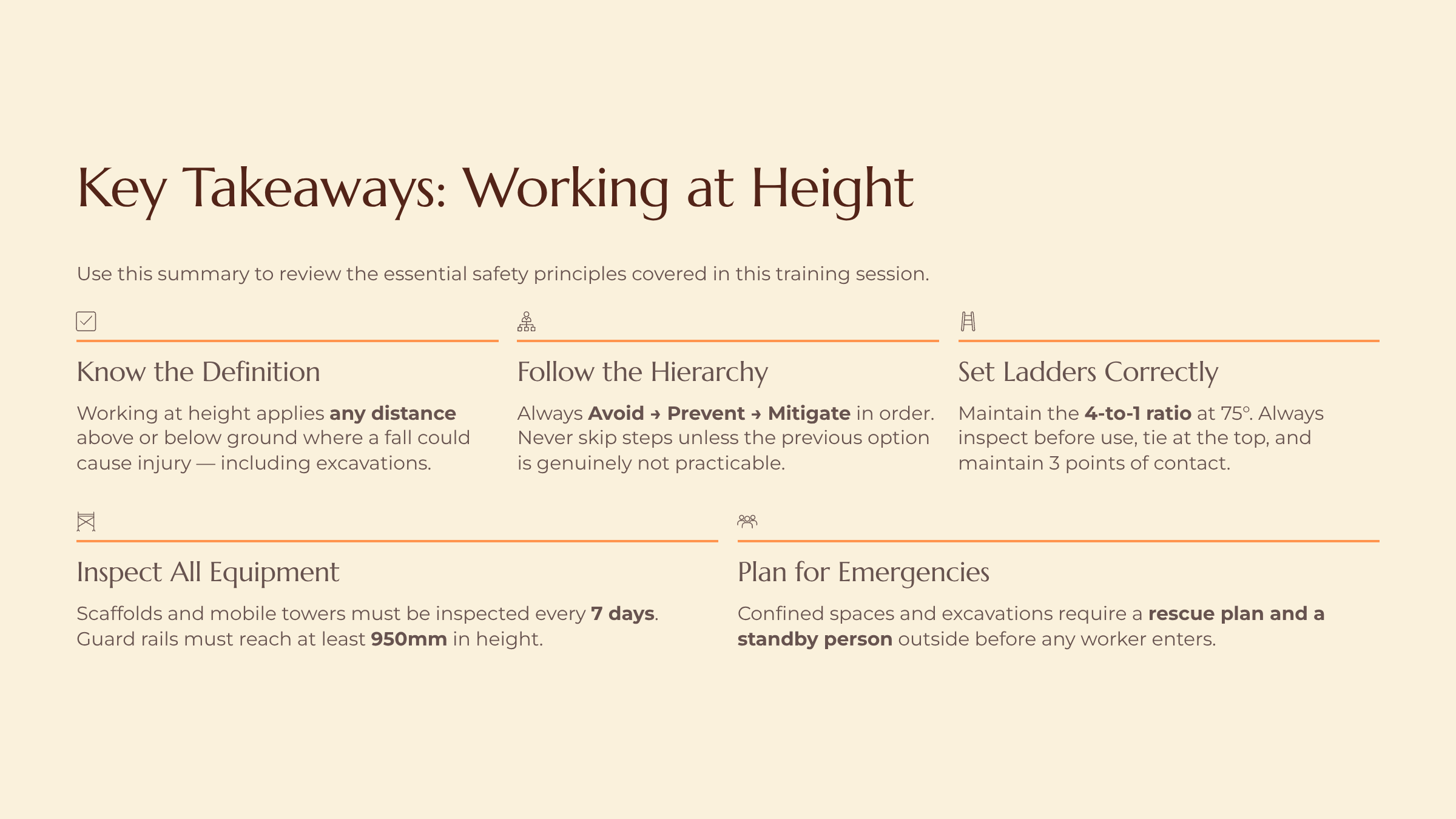
Key Takeaways: Working at Height summary covering the essential safety principles: definition, hierarchy of control, ladder safety, equipment inspection, and emergency planning.
Slide 2 of 12 Working at Height
Introduction
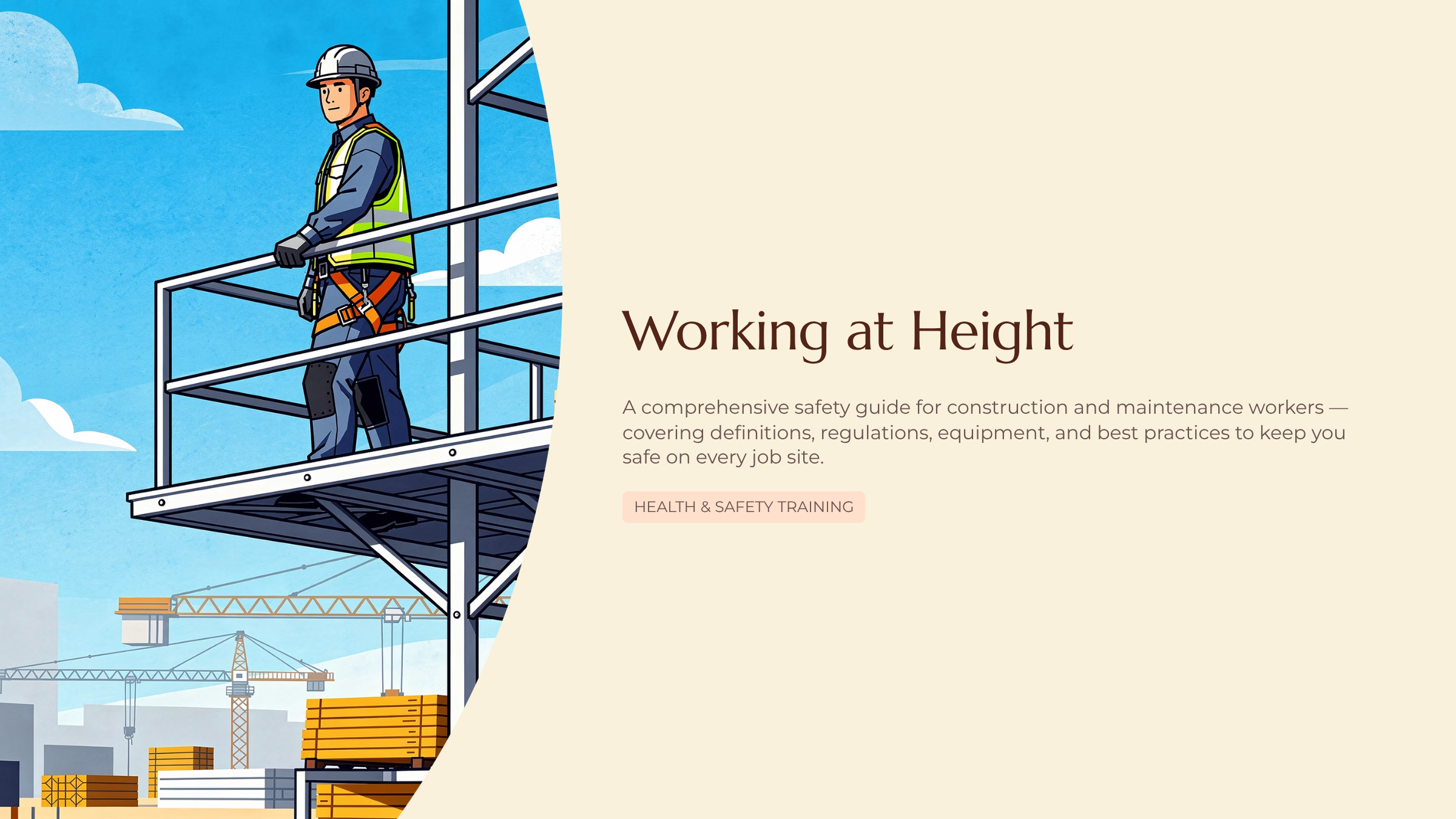
Working at Height: A comprehensive safety guide for construction and maintenance workers covering definitions, regulations, equipment, and best practices.
Slide 3 of 12 What is "Working at Height"?
Definition
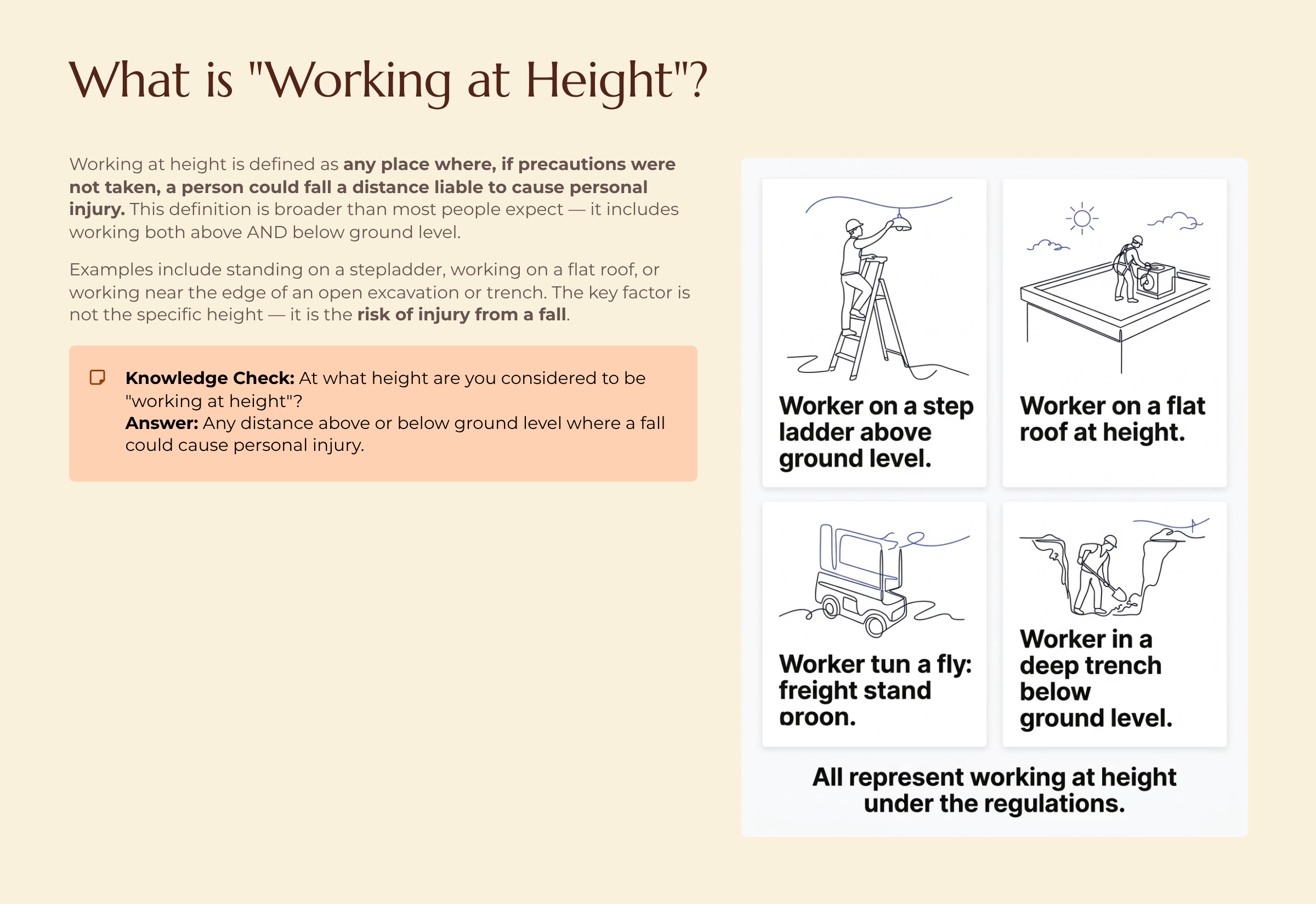
What is Working at Height: Any place where a person could fall and cause personal injury โ€” including above and below ground level. Examples include stepladders, flat roofs, and excavations.
Knowledge Check โ€” Question 1 of 10

At what height are you considered to be working at heights?
Slide 4 of 12 The Hierarchy of Control
Regulatory Framework
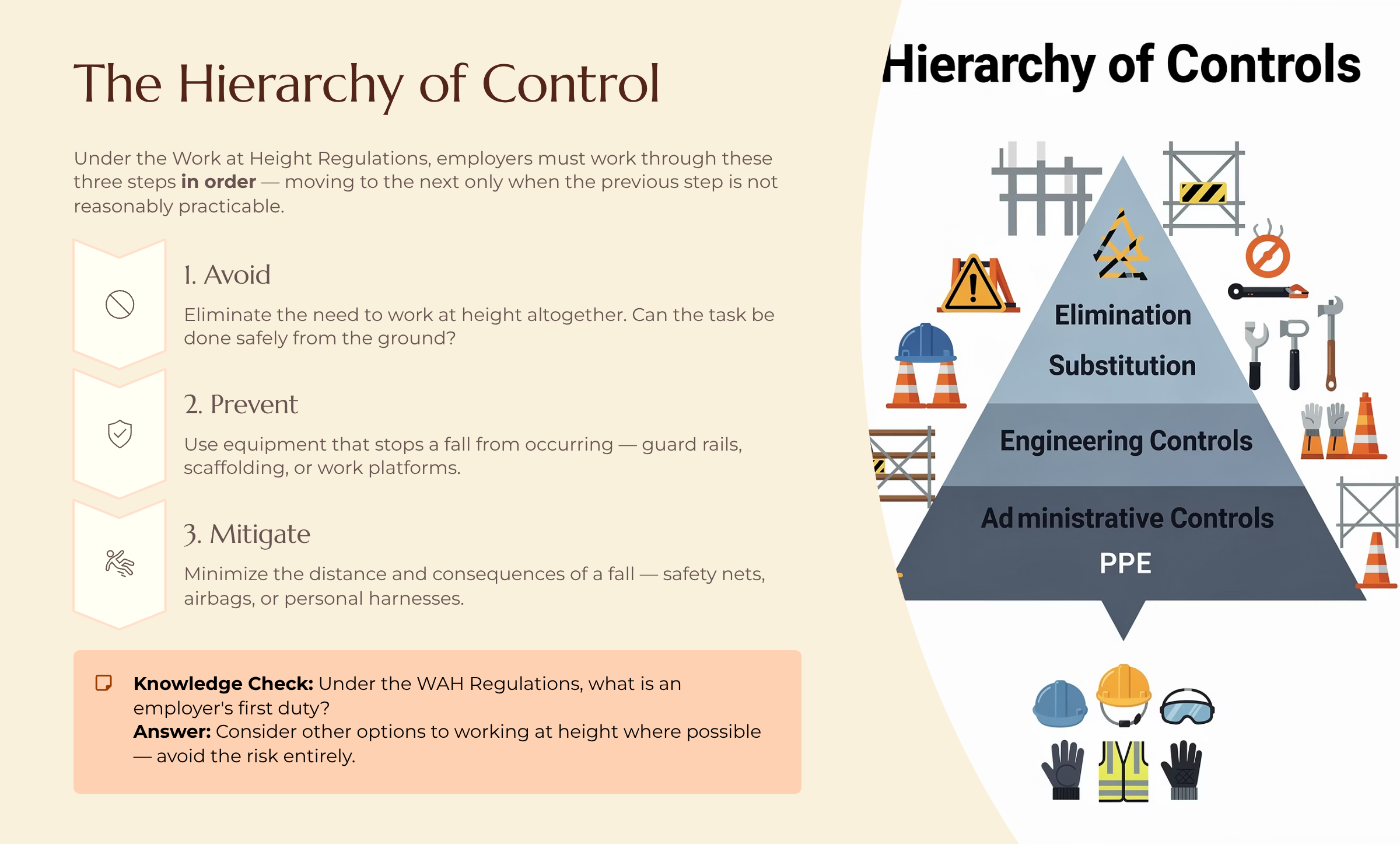
The Hierarchy of Control: Work at Height Regulations require employers to avoid, prevent, then mitigate in order. Only move to the next step when the previous is not reasonably practicable.
Knowledge Check โ€” Question 2 of 10

Under the Work at Height Regulations an employer has a duty to:
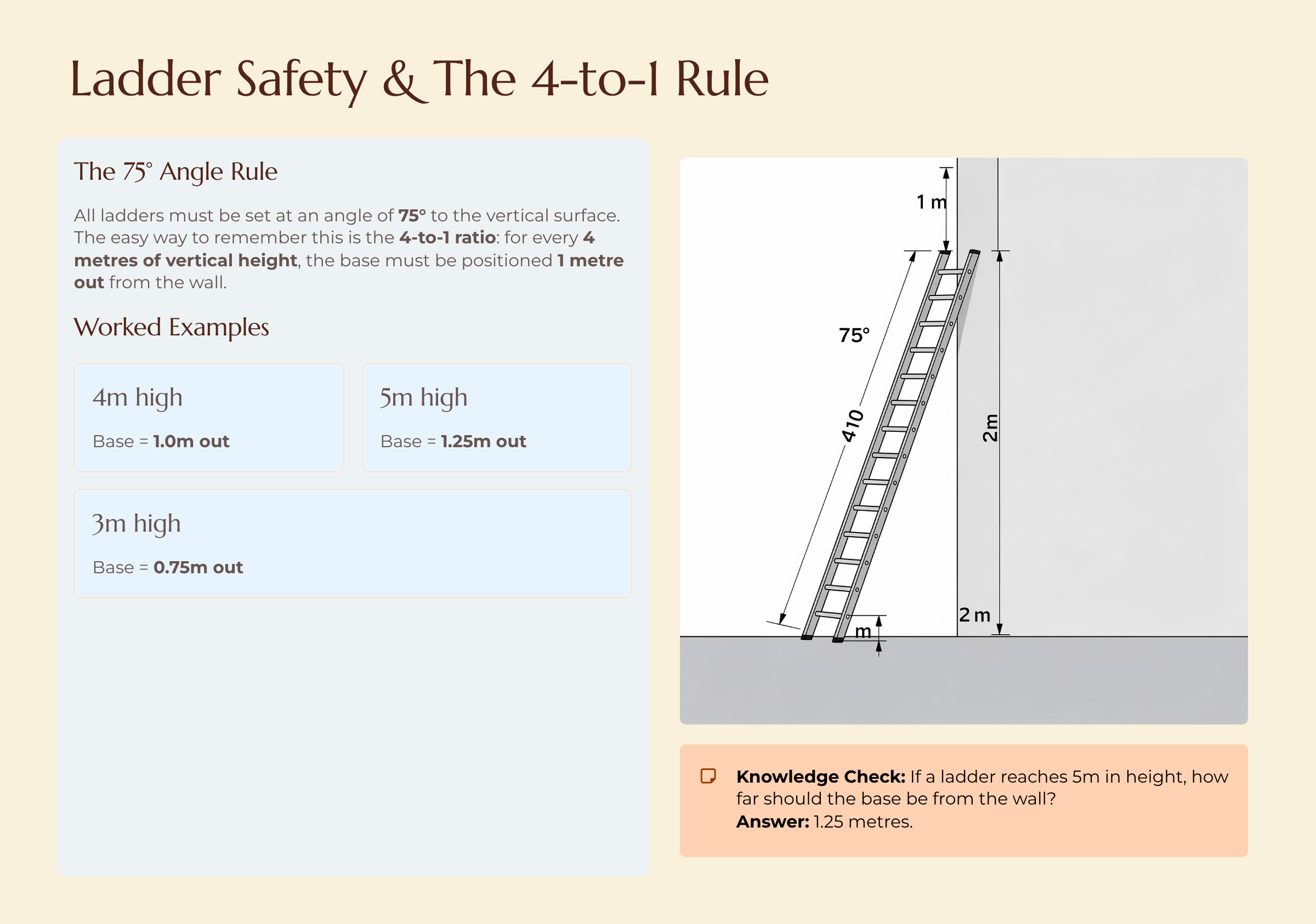
Slide 5 of 12 Ladder Safety & The 4-to-1 Rule
Critical Angle
Ladder Safety and The 4-to-1 Rule: All ladders must be set at 75 degrees. For every 4 metres of height, position the base 1 metre out from the wall.
Interactive Tool โ€” 4-to-1 Ladder Calculator

Practice the 4-to-1 rule! Enter a ladder height and see the correct base distance:

metres
๐Ÿ“ Calculation:
4 metres รท 4 = 1.0 metres
Base should be 1.0 metres from the wall
Ladder Height
4.0m
Base Distance
1.0m
๐Ÿ’ก Remember: For every 4 metres of height, position the base 1 metre out from the wall. This creates the safe 75ยฐ angle.
Knowledge Check โ€” Question 3 of 10

If a ladder reaches 5 metres in height, how far should the base of the ladder be placed out from the wall?
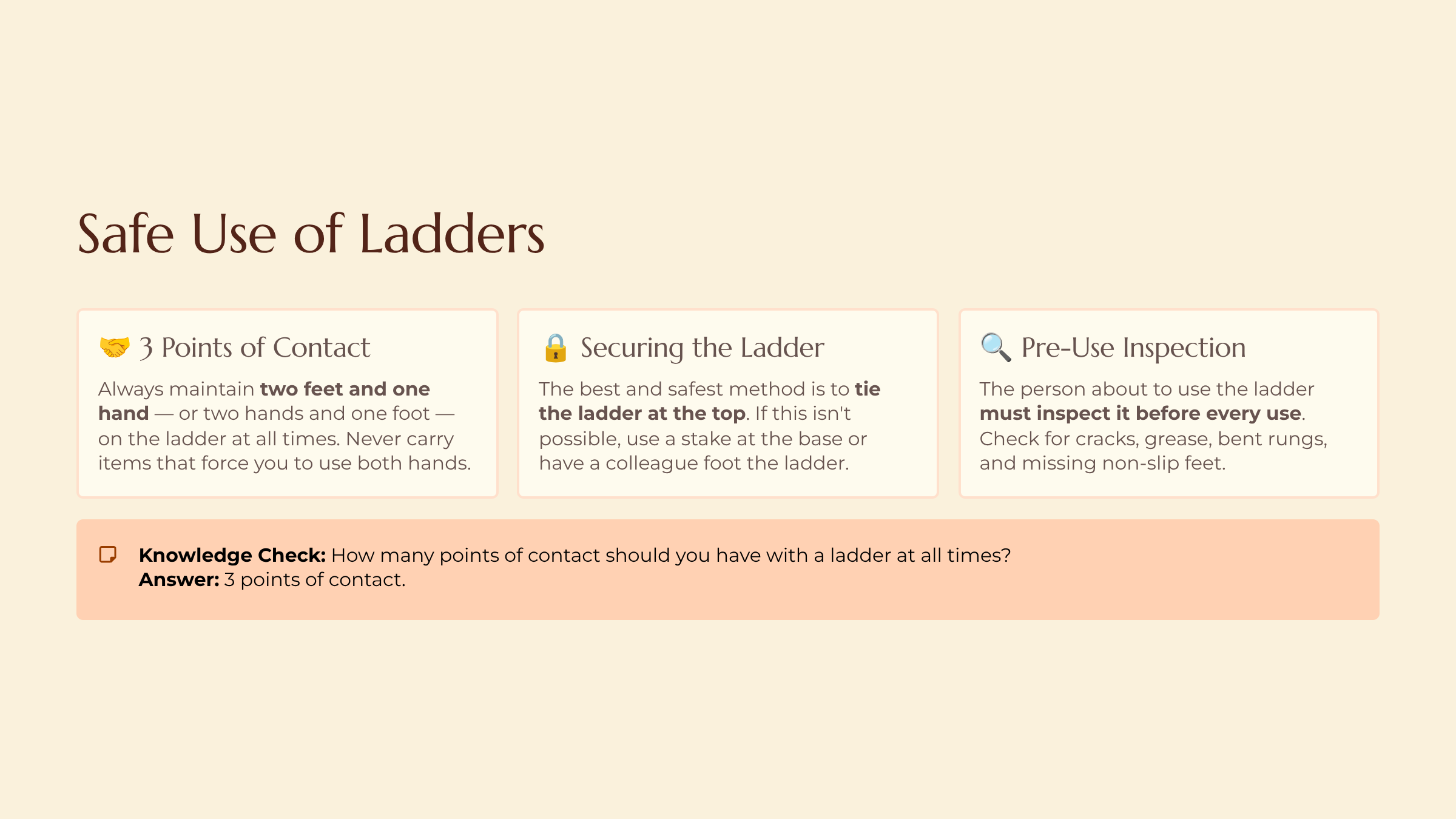
Slide 6 of 12 Safe Use of Ladders
Best Practices
Safe Use of Ladders: Maintain 3 points of contact, secure the ladder by tying at the top, and inspect before every use for cracks, grease, and bent rungs.
Knowledge Check โ€” Question 4 of 10

How many points of contact should you have with a ladder at all times?
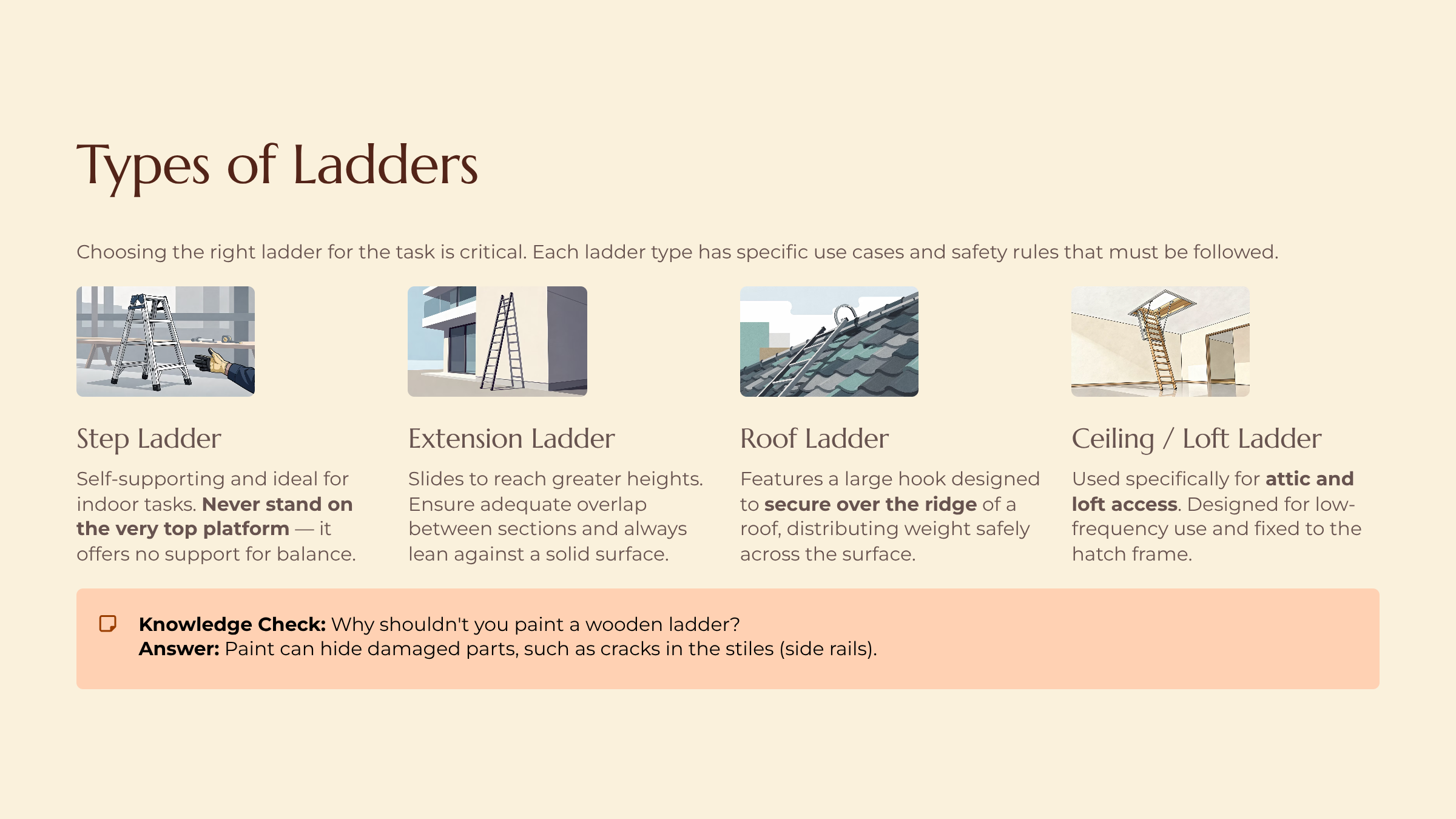
Slide 7 of 12 Types of Ladders
Equipment Selection
Types of Ladders: Step ladders, extension ladders, roof ladders, and ceiling/loft ladders. Each type has specific use cases and safety rules.
Interactive Challenge โ€” Identify the Equipment

Test your knowledge! Click on each piece of equipment to identify it:

๐Ÿชœ
Equipment A
Click to identify
๐Ÿ“
Equipment B
Click to identify
๐Ÿ—๏ธ
Equipment C
Click to identify
๐Ÿ 
Equipment D
Click to identify
๐ŸŽฏ Progress: 0/4 identified
Knowledge Check โ€” Question 5 of 10

It's not wise to paint a ladder because?
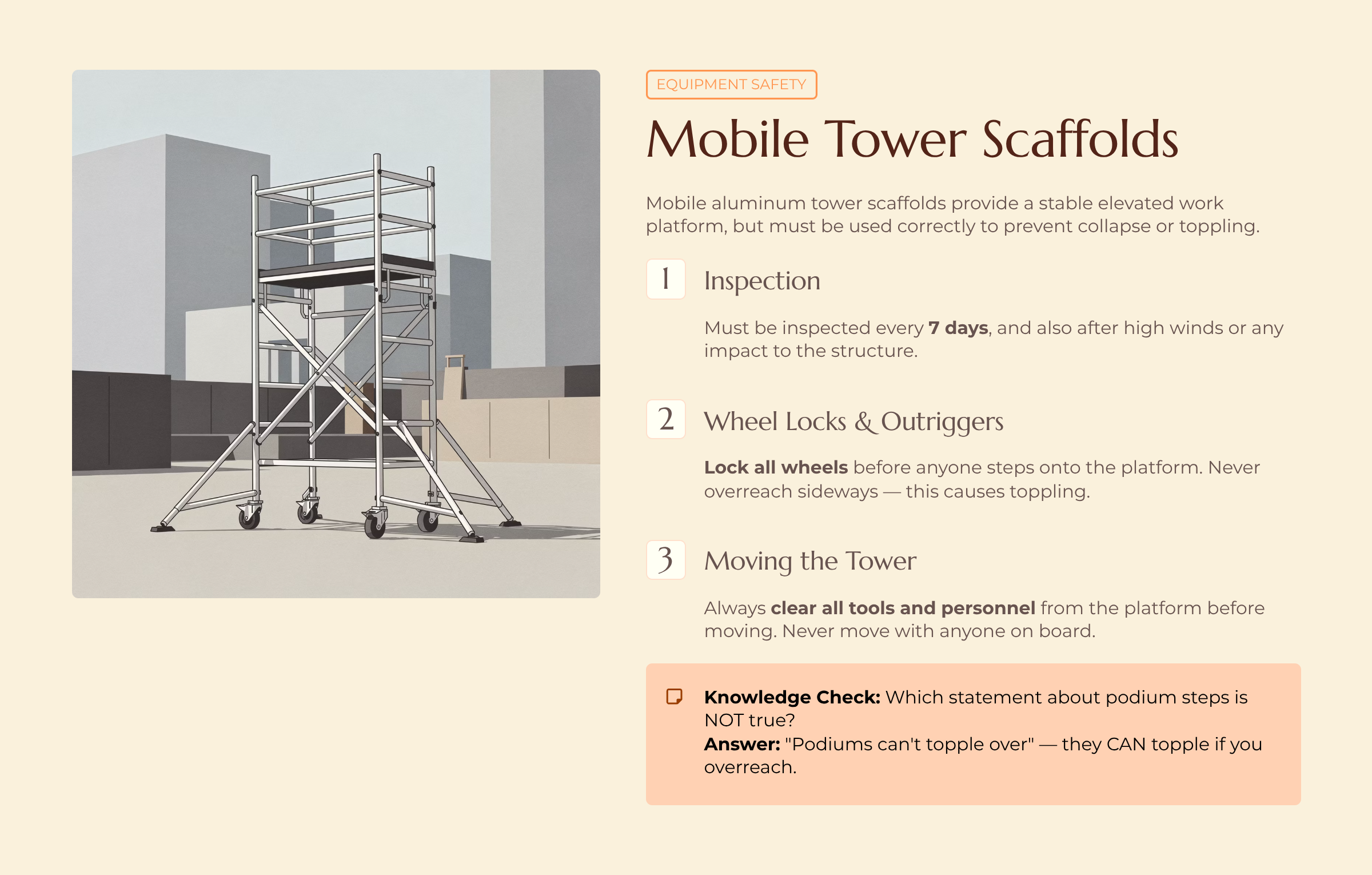
Slide 8 of 12 Mobile Tower Scaffolds
Equipment Safety
Mobile Tower Scaffolds: Must be inspected every 7 days, wheels locked before use, never overreach sideways to avoid toppling.
Knowledge Check โ€” Question 6 of 10

Which of the following is NOT true when using podium steps?
Slide 9 of 12 Scaffold Guard Rails & Edge Protection
Height Requirements
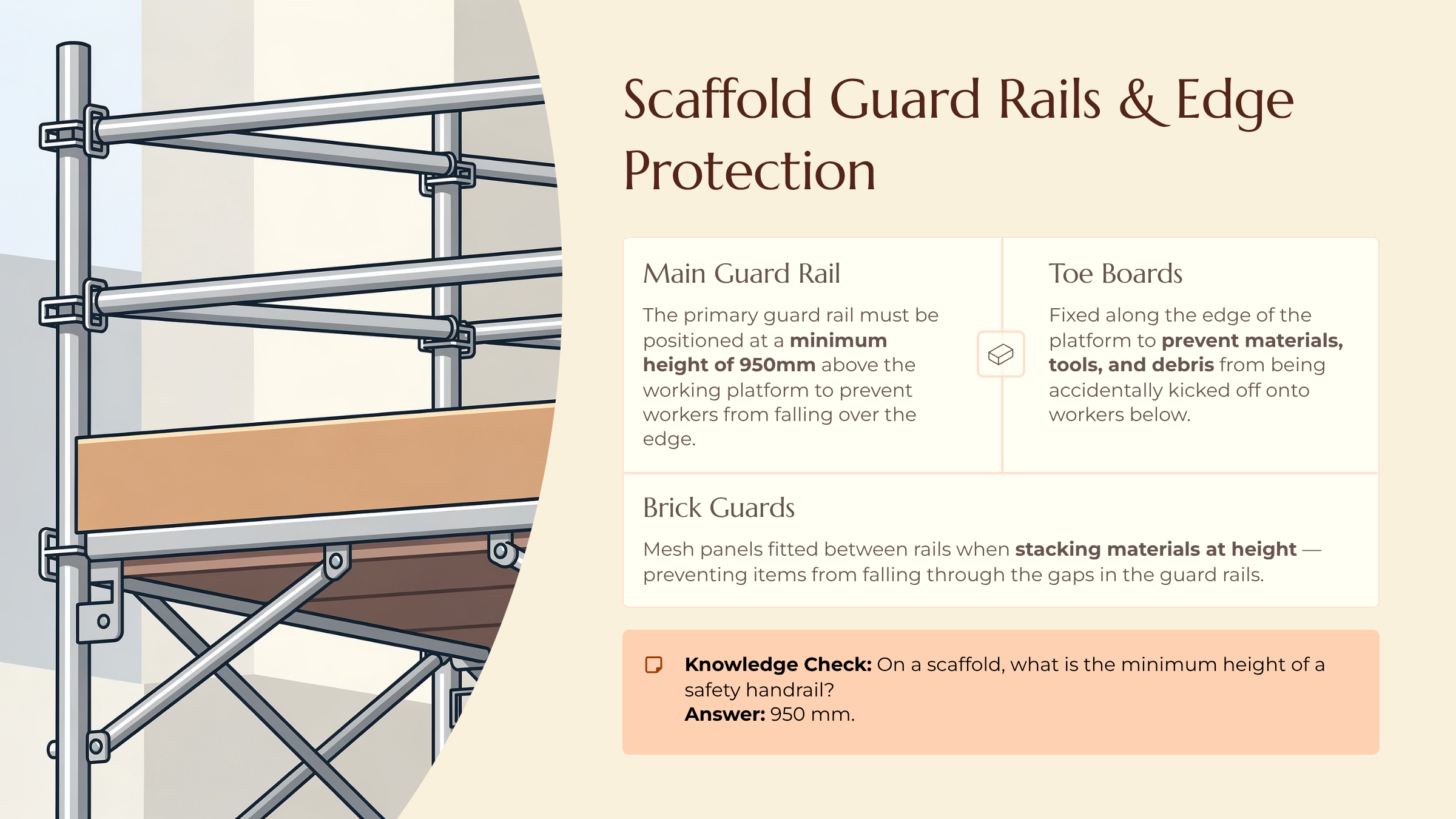
Scaffold Guard Rails and Edge Protection: Main guard rail minimum height 950mm, toe boards prevent materials falling, brick guards fitted when stacking materials.
Knowledge Check โ€” Question 7 of 10

On a scaffold the minimum height of a safety hand rail should be?
Slide 10 of 12 Fragile Roofs & Edge Protection
High-Risk Surfaces
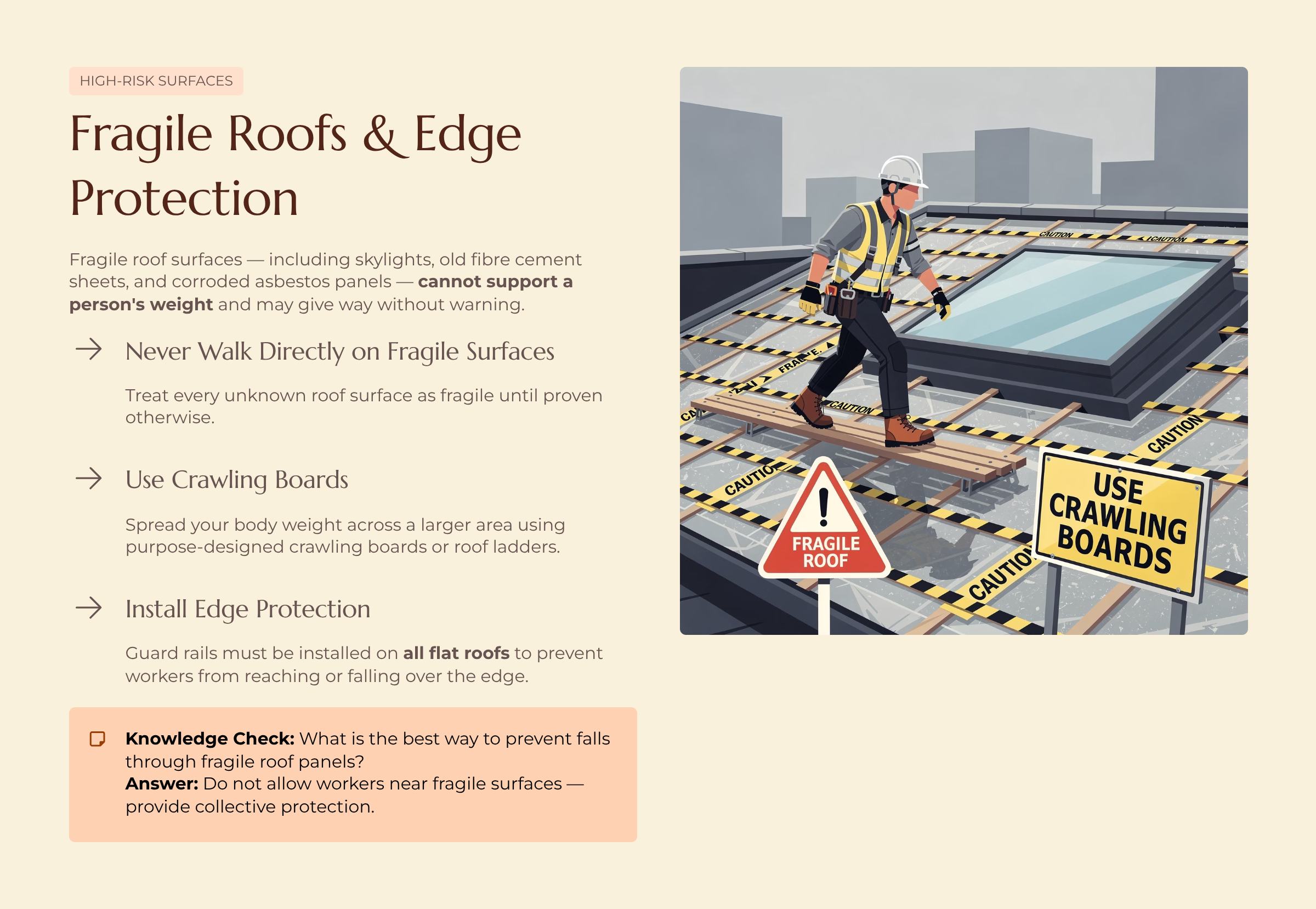
Fragile Roofs and Edge Protection: Never walk directly on fragile surfaces. Use crawling boards to spread weight and install edge protection on all flat roofs.
Knowledge Check โ€” Question 8 of 10

If you want to avoid people from falling through fragile roof panels what should you do?
Slide 11 of 12 Confined Spaces
Emergency Planning
Confined Spaces: Require designated Top Man outside, atmospheric monitoring, and hot work hazard management. Risk includes fire, explosion, and oxygen depletion.
Knowledge Check โ€” Question 9 of 10

What is the main reason for having a person positioned immediately outside a confined space whilst work is taking place inside it?
Slide 12 of 12 Excavation Safety
Underground Risks
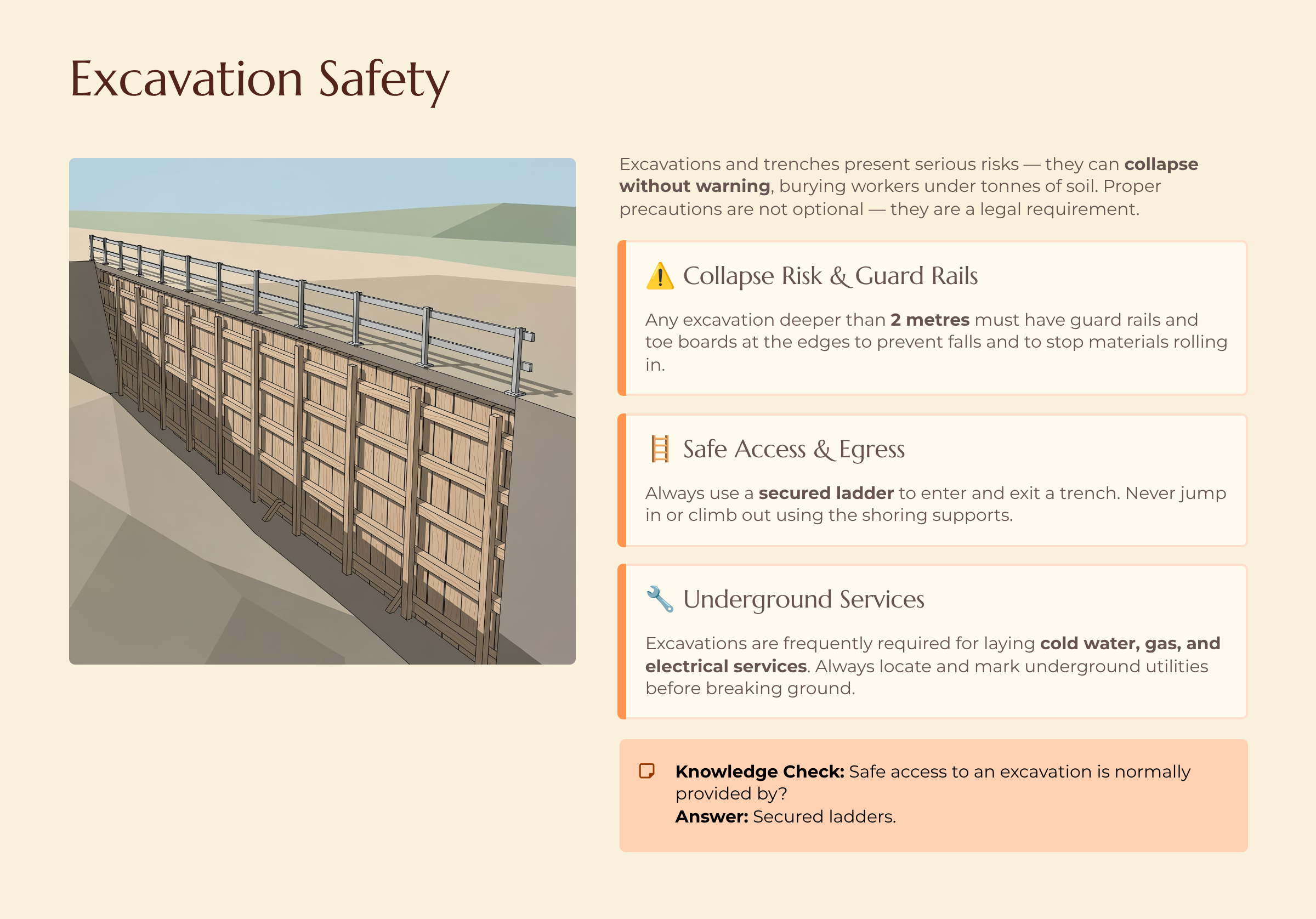
Excavation Safety: Excavations over 2 metres require guard rails and toe boards. Safe access via secured ladders. Frequently used for laying cold water, gas, and electrical services.
Interactive Assessment โ€” Working at Height Scenarios

Final challenge! Click on each scenario to assess if it qualifies as "working at height":

๐Ÿชœ
Standing on a stepladder to reach a high cupboard
Click: Working at Height or Not?
๐Ÿšถ
Walking on a flat concrete surface at ground level
Click: Working at Height or Not?
๐Ÿ•ณ๏ธ
Working in a trench 1 metre deep
Click: Working at Height or Not?
๐Ÿ 
Installing guttering on a single-storey house
Click: Working at Height or Not?
โš–๏ธ Progress: 0/4 scenarios assessed
Knowledge Check โ€” Question 10 of 10

Safe access to an excavation is normally provided by:

Lesson Complete!

You've worked through all 12 Working at Height slides and answered all 10 knowledge check questions.

0 / 10
Calculating...

๐Ÿ’พ Saving your progress...